Cricket Extras Explained: Wides, No-Balls, Byes & Leg-Byes
Wides, no-balls, byes and leg-byes confuse a lot of players. Here is a clear explanation of all four types of cricket extras and how each is scored.
Extras are runs that are not scored off the bat, and they confuse a lot of new players and scorers. There are four main types — wides, no-balls, byes, and leg-byes — and each is treated differently. Here is a clear explanation of all of them.
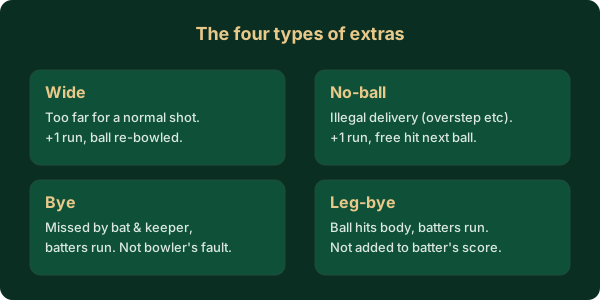
Wide
A wide is called when the ball passes too far from the batter for them to play a normal shot. It adds one run to the batting team (plus any runs they physically run), and the ball must be re-bowled — it does not count as one of the six balls in the over. A wide is charged against the bowler.
No-ball
A no-ball is an illegal delivery — most commonly when the bowler oversteps the front line, but also for other reasons. It adds one run, must be re-bowled, and in most limited-overs cricket the next delivery is a free hit, where the batter cannot be out except by run-out. Any runs hit off the bat on a no-ball still go to the batter.
Bye
A bye happens when the ball passes the batter without touching the bat or their body, gets past the wicketkeeper, and the batters run. These runs are extras — they are not added to the batter’s score — but importantly, a bye is not the bowler’s fault, so it is not charged against the bowler’s figures.
Leg-bye
A leg-bye is similar, but the ball hits the batter’s body (usually the pads or legs) rather than the bat, and the batters run. Again, these are extras not credited to the batter, and not charged to the bowler.
How extras affect the scorecard
- Wides and no-balls count against the bowler; byes and leg-byes do not.
- A maiden over (no runs off the bat) is not broken by byes or leg-byes, but a wide does break it.
- All four appear in the innings total under “Extras,” usually broken down as b, lb, w, nb.
Getting extras right is one of the trickiest parts of scoring by hand. A good scoring app handles the logic automatically — PitchSide, for example, correctly re-bowls wides and no-balls, applies the free hit, and keeps byes from breaking a maiden, so you never have to remember the rules mid-over.
Score your next match the easy way
PitchSide is a free, offline cricket scorer. No login, no download — just open and score.
Open PitchSide →