How to Score a Cricket Match: A Beginner’s Guide
A simple, step-by-step guide to scoring a cricket match — runs, wickets, extras and overs — whether you use a paper scorebook or an app.
Keeping score at a cricket match can feel confusing the first time, but the basics are simple once you break them down. Whether you are scoring a gully game, a club match, or a local tournament, this beginner’s guide walks you through exactly how to record what happens, ball by ball.
What a cricket scorer actually records
At its heart, scoring is about recording three things on every delivery: how many runs were scored, whether a wicket fell, and whether the ball was an extra (like a wide or no-ball). Add these up over the innings and you have the full story of the match.
Step 1: Set up your scorebook or app
Before the first ball, note the two teams, the number of overs per side, who won the toss, and who is batting first. List the batting order and the bowlers. A traditional paper scorebook has rows for each batter and columns for each over — a scoring app does this automatically.
Step 2: Record each ball
For every legal delivery, write down what happened:
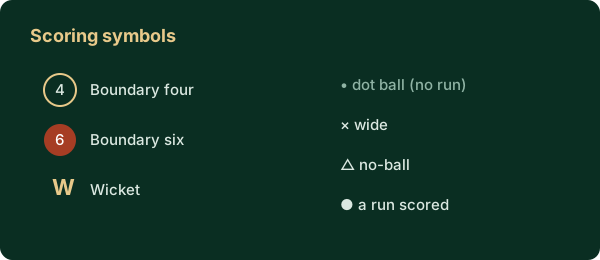
- A number (0–6): the runs scored off the bat. A dot (•) means no run.
- 4 or 6: a boundary — often circled to stand out.
- W: a wicket. Note how the batter was out and which bowler took it.
- Wide (×), no-ball, bye, leg-bye: these are extras, recorded separately.
Step 3: Keep the running totals
As you go, keep track of the team total, wickets fallen, and overs bowled. A score is written as runs/wickets — for example, “96/3 after 12 overs” means 96 runs for the loss of 3 wickets. Each batter’s individual runs and balls faced are tracked too, along with each bowler’s figures.
Step 4: End of the innings
When the overs run out or ten wickets fall, total everything up. The batting side’s final score becomes the target (plus one) for the other team. Then you repeat the whole process for the second innings.
Common terms you’ll use
| Term | Meaning |
|---|---|
| Strike rate | Runs per 100 balls faced (batting) |
| Economy | Runs conceded per over (bowling) |
| Run rate | Runs scored per over by the team |
| Maiden | An over where no runs are conceded |
| Fall of wickets | The score at which each wicket fell |
Paper or app?
A paper scorebook works anywhere and never runs out of battery, but it takes practice and mistakes are easy. A scoring app handles the maths for you, keeps strike rates and economies automatically, and lets you share the scorecard instantly. The main worry with apps — no internet at the ground — is solved by an offline-first app like PitchSide, which works with no signal at all.
Score your next match the easy way
PitchSide is a free, offline cricket scorer. No login, no download — just open and score.
Open PitchSide →