Cricket Formats Explained: T20 vs One Day vs Test
T20, One Day, Test — cricket comes in several formats. Here’s a simple comparison of how they differ in overs, length and style.
Cricket is played in several formats, from three-hour evening games to five-day epics. If you’re new to the sport, the different formats can be confusing. Here’s a clear comparison of the main types of cricket.
T20 (Twenty20)
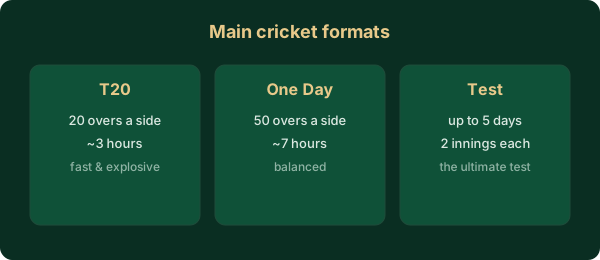
The shortest and fastest mainstream format. Each team bats for a maximum of 20 overs, and a match lasts about three hours. T20 is explosive, high-scoring, and hugely popular for local leagues and evening games because it fits into a single session.
One Day (50 overs)
Each team bats for up to 50 overs, and a match takes most of a day — around seven hours. It balances the aggression of T20 with more room for strategy and building an innings.
Test cricket
The longest and most traditional format, played over up to five days with two innings per side. Test cricket is considered the ultimate examination of skill and temperament. It’s rarely played at local level but is the pinnacle of the international game.
Local and club formats
Most local and club cricket uses shorter limited-overs formats — commonly anything from 6 to 20 overs a side, depending on time and tradition. Gully and tape-ball cricket often invent their own rules. Whatever the length, the scoring principles are the same.
| Format | Overs per side | Rough duration |
|---|---|---|
| T20 | 20 | ~3 hours |
| One Day | 50 | ~7 hours |
| Test | Unlimited (5 days) | Up to 5 days |
| Local / club | 6–20 (varies) | 1–3 hours |
Score your next match the easy way
PitchSide is a free, offline cricket scorer. No login, no download — just open and score.
Open PitchSide →