Cricket Fielding Positions Explained (With Diagram)
Slip, gully, silly point, cow corner — cricket’s fielding positions sound like a foreign language. This guide explains the main ones simply.
Cricket fielding positions have wonderfully odd names — slip, gully, silly point, fine leg. For newcomers it can sound like another language. This guide explains the basic fielding positions and what they’re for.
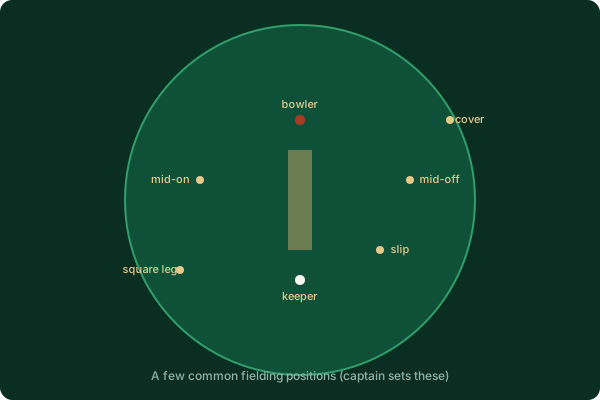
How fielding positions work
The captain places fielders around the ground to stop runs and take catches. Positions are described relative to the batter: the off side (the side the bat faces) and the leg side (behind the batter’s legs), and whether they’re in front of or behind the batter.
Common positions explained
Close catching
- Slip: next to the wicketkeeper, to catch edges.
- Gully: wider than slip, for square edges.
- Short leg / silly point: very close to the bat, for catches off the pad or edge.
Inner ring (saving singles)
- Cover / point: on the off side, stopping drives and cuts.
- Mid-off / mid-on: straight, either side of the bowler.
- Square leg: on the leg side, square of the batter.
Outfield (stopping boundaries)
- Long-on / long-off: straight, near the boundary.
- Third man / fine leg: behind the batter, for deflections.
- Deep midwicket / cow corner: on the leg side boundary.
Why it matters for scoring
When a catch is taken, the scorer records which fielder took it — so knowing the positions helps you note dismissals accurately (“c cover b bowler”). PitchSide lets you credit the fielder when you record a wicket.
Score your next match the easy way
PitchSide is a free, offline cricket scorer. No login, no download — just open and score.
Open PitchSide →